
India’s Space Journey: Six Milestones That Put the Nation Among the Stars
India’s story of space exploration is one of courage, resilience, and vision. What began as a humble scientific pursuit in the 1960s—launching sounding rockets from a tiny coastal village in Kerala—has today grown into a global phenomenon. The Indian Space Research Organisation (ISRO) has transformed the country into a space power, mastering cost-effective technology, inspiring millions, and pushing humanity closer to the stars.
This blog explores six landmark achievements in India’s space journey: National Space Day, PSLV as the World’s Launch Pad, NAVIC (India’s own GPS), Docking into History, the First Indian Astronaut on ISS, and the Gaganyaan Mission. Together, they represent India’s past, present, and future in space
1. National Space Day – Celebrating India’s Cosmic Triumphs
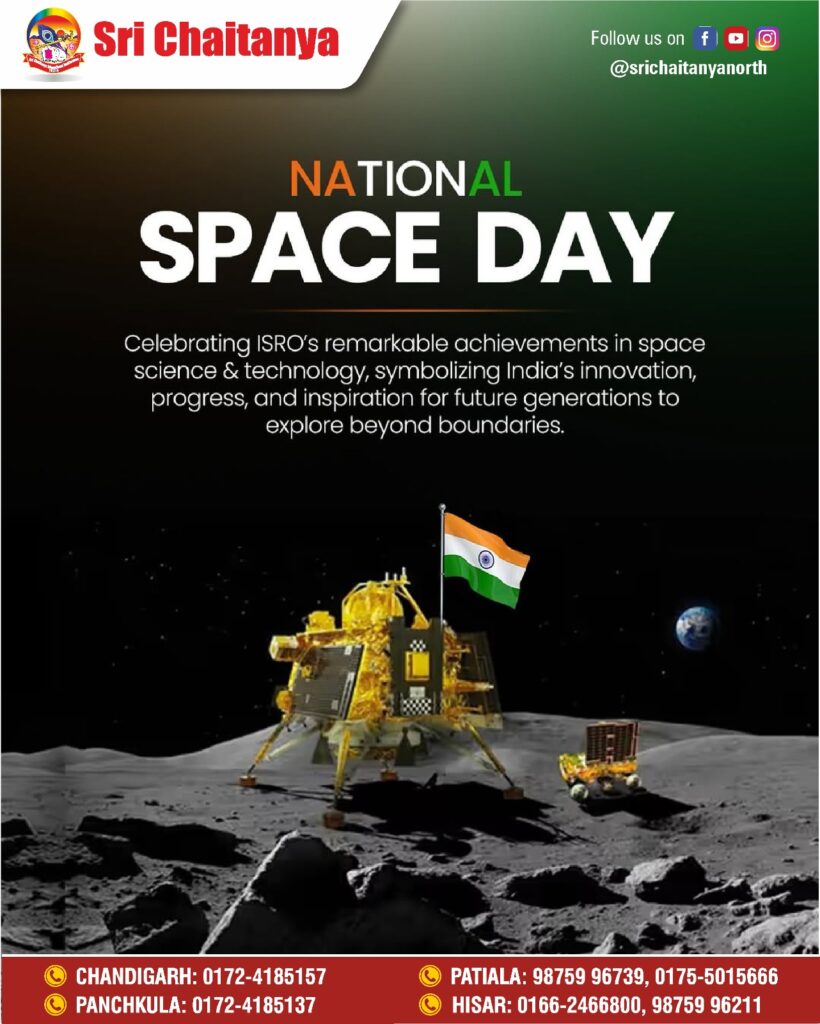
India celebrates National Space Day to honor the country’s growing role in space exploration. It is a day dedicated not just to rockets and satellites but also to the scientists, engineers, and visionaries who transformed India into a space power.
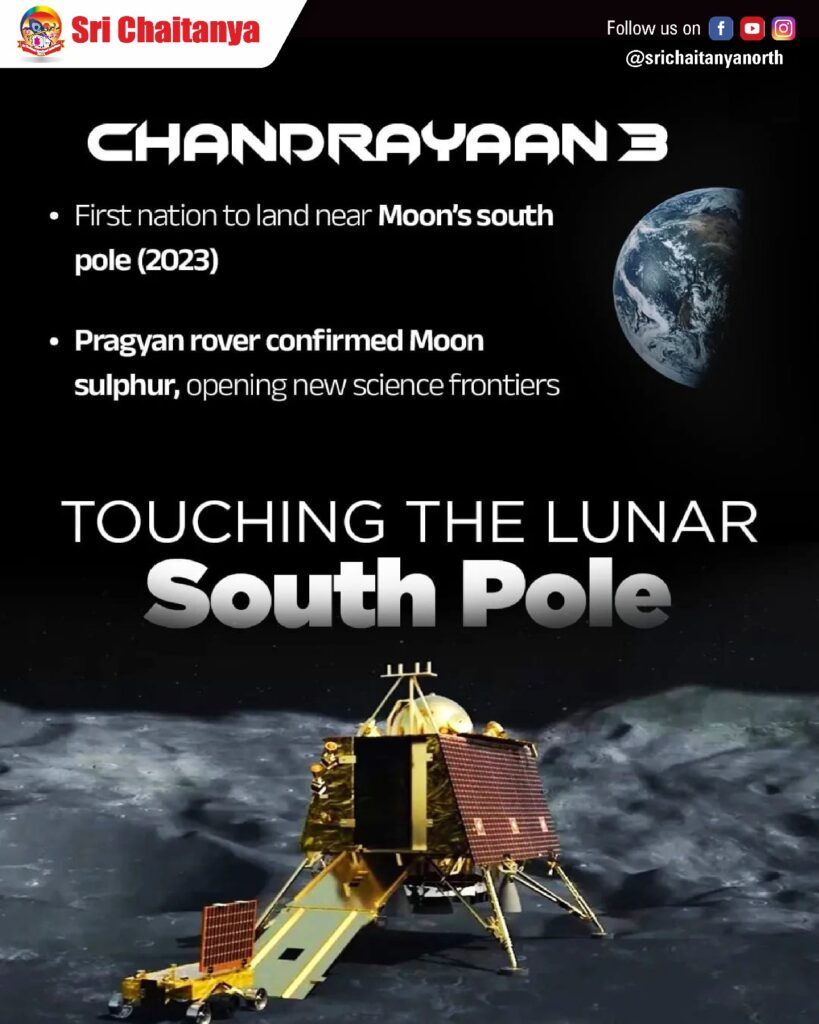
The day is particularly tied to Chandrayaan-3’s success in 2023, when India became the first nation to land near the Moon’s south pole. This achievement placed India in the elite group of space explorers, alongside the USA, Russia, and China.
National Space Day celebrates India’s journey from Aryabhata (1975)—its first satellite—to becoming a nation that inspires global respect for its technological strength.
Why it matters: National Space Day reminds us that space is not just about science—it is about national pride, technological sovereignty, and global leadership. For millions of young Indians, it is a call to dream bigger and contribute to humanity’s cosmic future.
2. PSLV – The World’s Launch Pad
If there is one rocket that symbolizes India’s reliability and efficiency, it is the Polar Satellite Launch Vehicle (PSLV). Nicknamed the “workhorse of ISRO”, PSLV is celebrated worldwide for its consistent performance.
In 2017, PSLV created a world record by launching 104 satellites in a single mission—a feat that stunned the world and highlighted India’s efficiency in multi-satellite deployment.
Satellites from 36+ countries have been launched by ISRO, making India the preferred partner in global space commerce.
Over 400+ foreign satellites have been successfully put into orbit, boosting India’s role in the $500 billion global space economy.
Beyond numbers, PSLV’s greatest contribution is trust. Countries see India as a cost-effective and dependable launch provider, cementing its title as the World’s Launch Pad.
3. NAVIC – India’s Own GPS
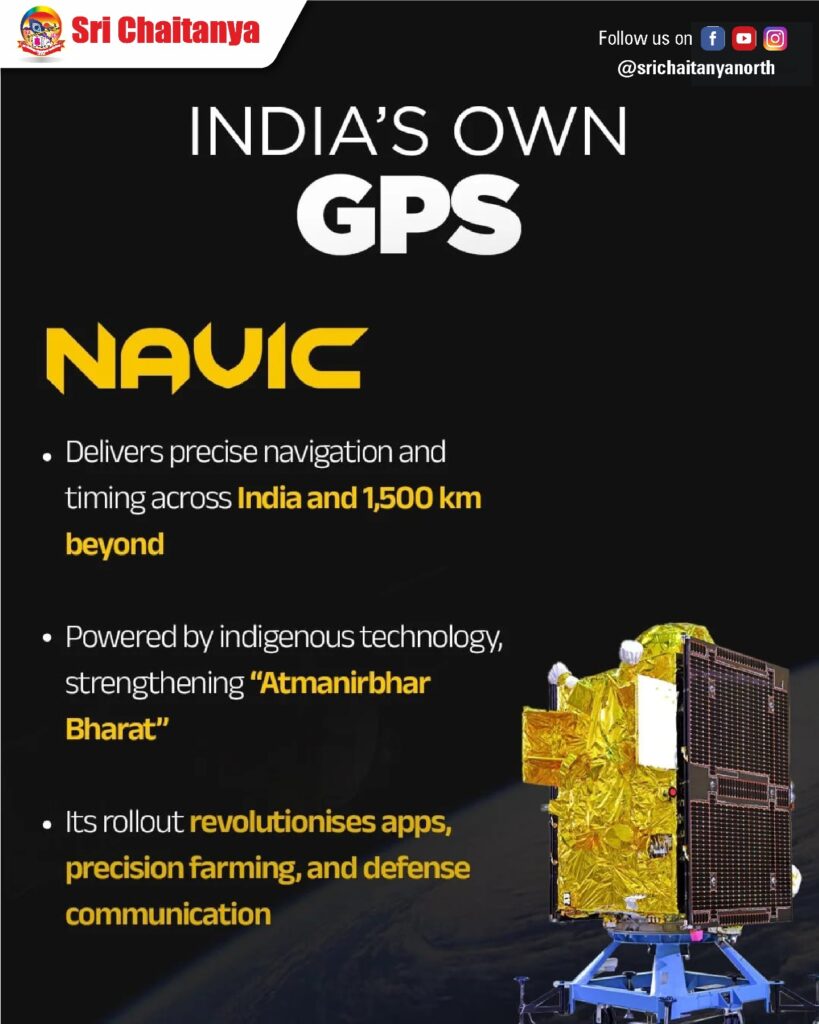
For decades, India relied on the American GPS system for navigation. But true space power requires independent capabilities. This vision gave rise to NAVIC (Navigation with Indian Constellation)—India’s very own GPS-like system.
NAVIC provides coverage across India and up to 1,500 km beyond its borders, offering highly accurate positioning data.
It has both civilian applications (transportation, disaster management, agriculture, logistics) and military uses (navigation, missile guidance, and secure communications).
With NAVIC-enabled smartphones and vehicles now rolling out, India is taking another step toward self-reliance in critical technology.
Why it matters: NAVIC reduces India’s dependence on foreign systems while giving strategic autonomy. It ensures that India can guide its defense, commerce, and citizens without relying on external powers.

4. Docking into History – India Masters Space Docking
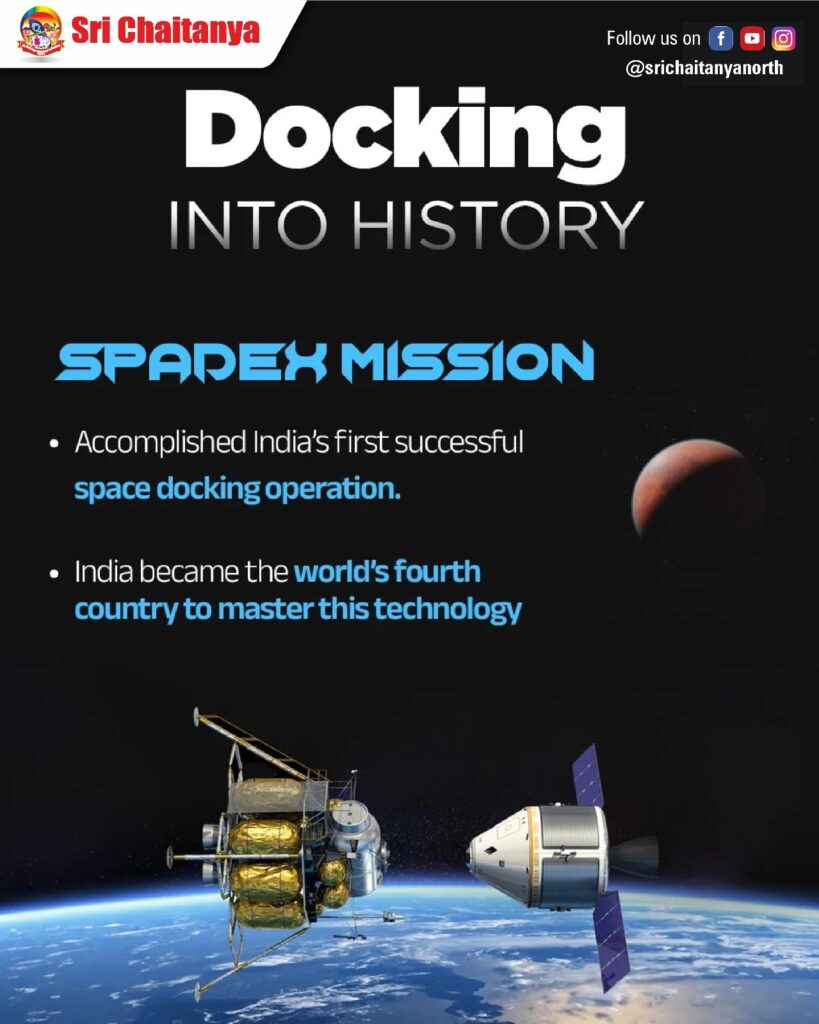
In global space exploration, mastering docking technology is a turning point. Docking refers to the ability of one spacecraft to physically connect with another in orbit—an essential capability for long-duration missions and space station operations.
India achieved a milestone when it successfully participated in a historic docking mission involving SpaceX’s Crew Dragon. This step made India the fourth country in the world to acquire and demonstrate docking technology.
Why it matters:
Docking is critical for refueling spacecraft, conducting repairs in orbit, and ensuring astronaut safety.
It allows Indian astronauts to participate in International Space Station (ISS) programs, opening doors to global collaboration.
This capability lays the foundation for future missions, including India’s own space station, expected in the coming decades.
5. First Indian Astronaut on the ISS – Shubanshu Shukla
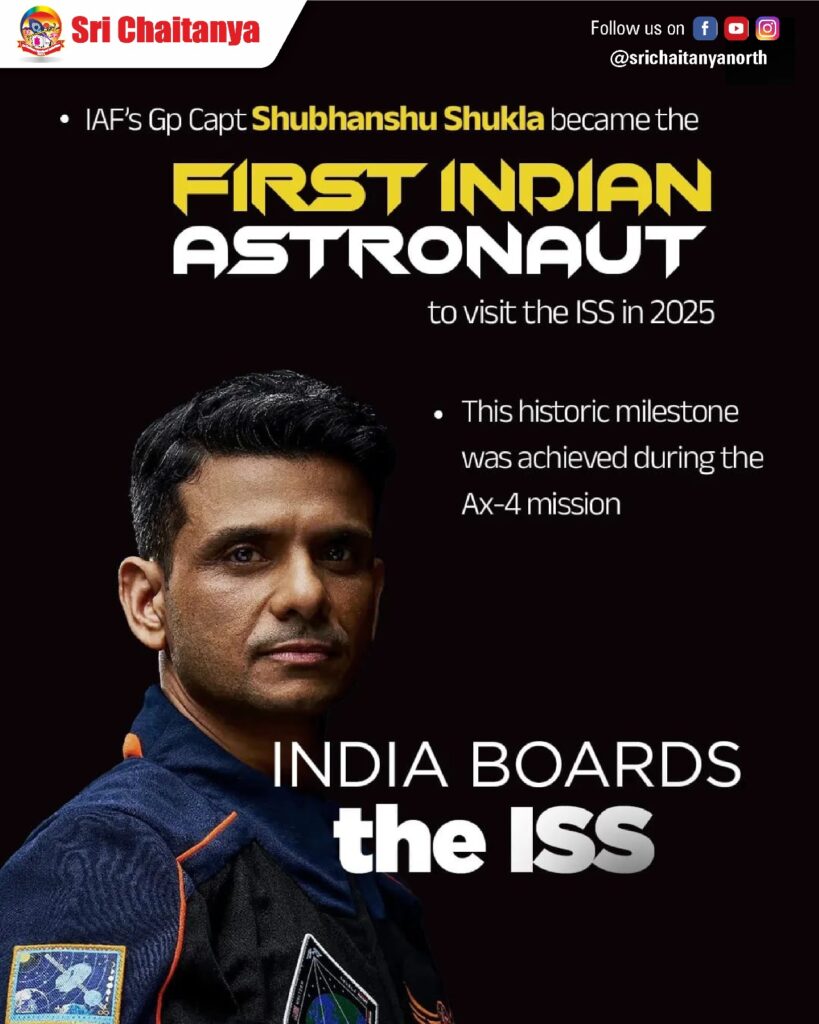
India’s journey into human space exploration took a bold leap in 2023, when Group Captain Shubanshu Shukla became the first Indian astronaut to visit the International Space Station (ISS).
His mission was part of the Axiom-3 Mission, in collaboration with NASA and SpaceX.
Shubanshu Shukla’s stay aboard the ISS not only involved research experiments but also showcased India’s readiness for human spaceflight.
His presence on the ISS symbolized India’s entry into the exclusive league of astronauts who live and work in space.
Why it matters: This achievement isn’t just about one astronaut. It represents the aspirations of 1.4 billion people and the potential of India to play a larger role in international human space exploration.
6. Gaganyaan – India’s Leap Toward Human Spaceflight
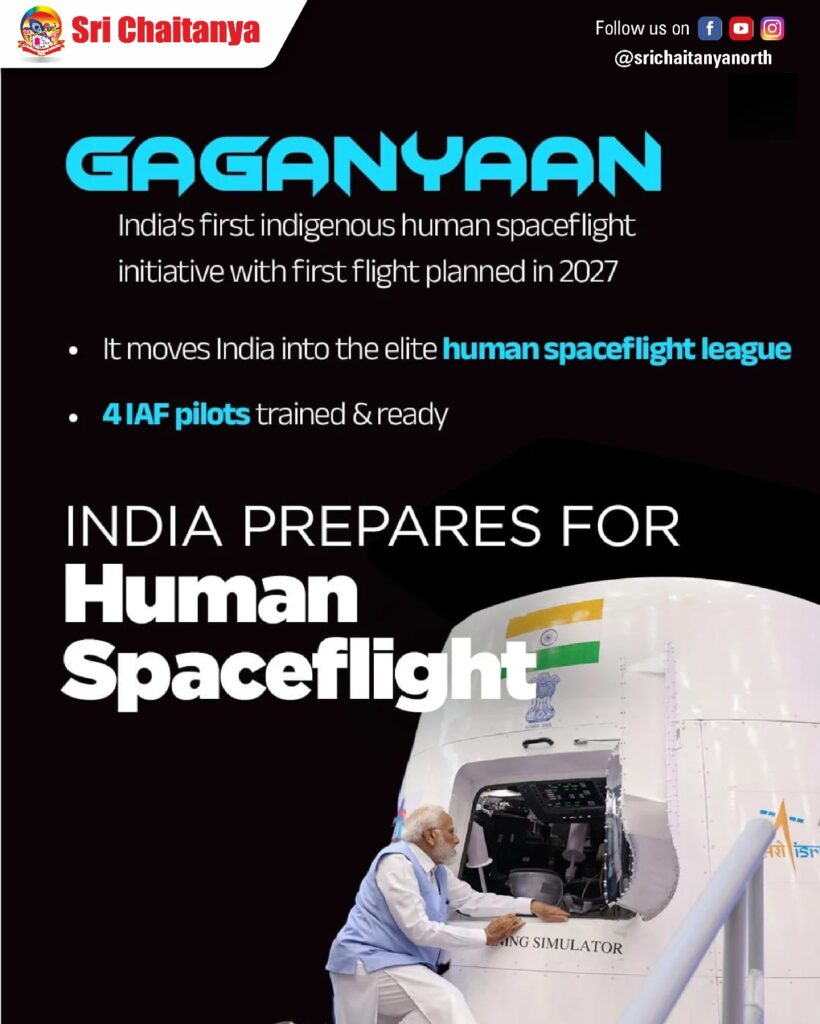
Perhaps the most ambitious of all, the Gaganyaan Mission is India’s bold step toward becoming a human spaceflight nation.
Planned for 2025, Gaganyaan will send three Indian astronauts (Vyomnauts) into low-Earth orbit on an indigenous spacecraft.
A team of four Indian Air Force pilots has already been shortlisted and trained for the mission.
With Gaganyaan, India will join the elite league of human spaceflight nations (USA, Russia, and China).
Beyond this milestone, ISRO has plans for:
A space station by 2035.
Future lunar crewed missions.
International collaboration on Mars and interplanetary projects.
Why it matters: Gaganyaan is not just a mission—it is a symbol of national pride, technological strength, and the vision of a future where India contributes to humanity’s expansion into space.






Conclusion – India’s Cosmic Future
India’s journey into space is not just about rockets and satellites. It is a story of vision, perseverance, and ambition. Each of the six milestones—National Space Day, PSLV, NAVIC, Docking Technology, First Indian Astronaut on ISS, and Gaganyaan—represents a step toward making India a true leader in space exploration.
As the world looks to the Moon, Mars, and beyond, India is not just catching up—it is shaping the future. From providing affordable satellite launches to developing cutting-edge navigation, and from sending astronauts to the ISS to preparing its own human spaceflight, India is proving that space belongs to those who dream big and act with determination.