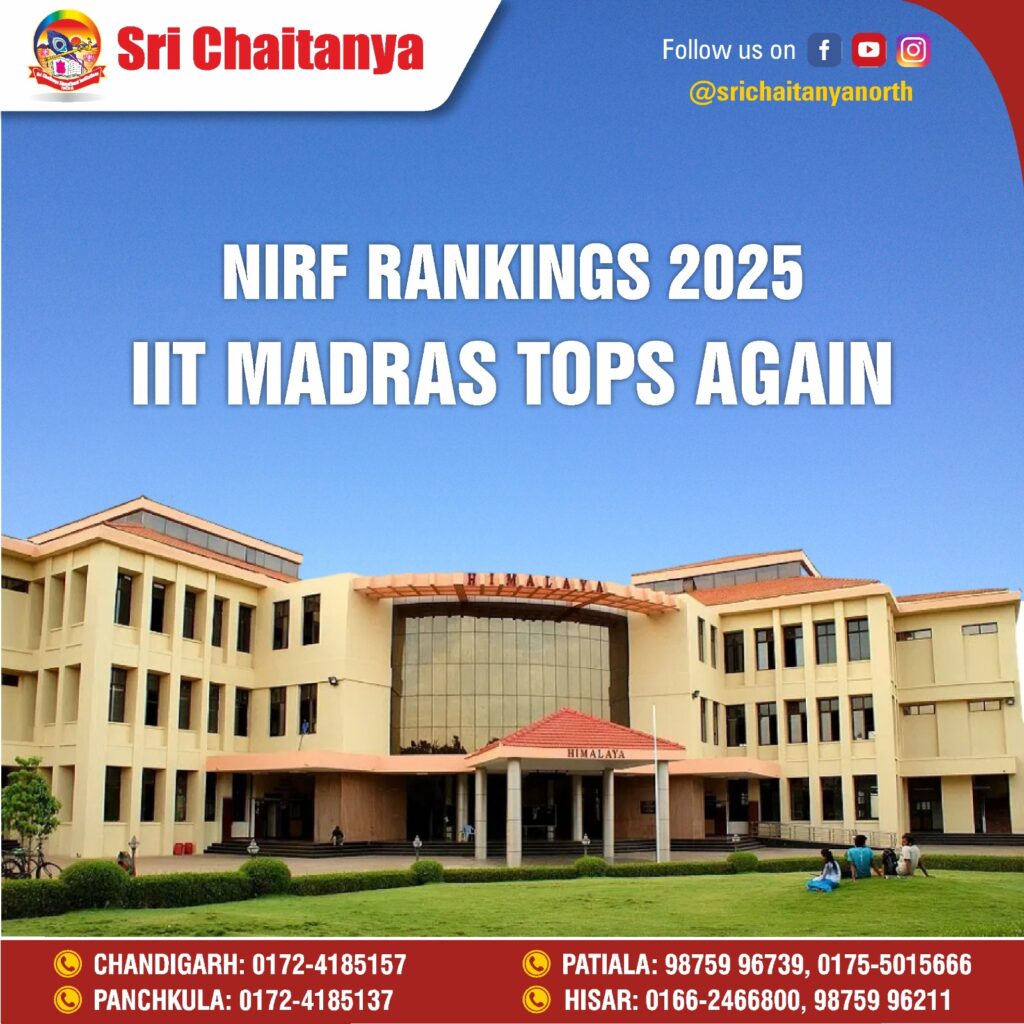
Why Does IIT Madras Keep Topping the Rankings?
IIT Madras has built an ecosystem that balances academic excellence, research leadership, innovation culture, and societal impact.
1. World-Class Research & Innovation
Over 1,000 research publications annually.
Patents, international collaborations, and startup incubation through IITM Research Park.
Launch of School of Innovation and Entrepreneurship boosted its performance in the Innovation category.
2. Strong Industry Partnerships
Collaborations with companies like Google, Microsoft, Indian Oil, and DRDO.
Industry-focused courses and internships keep students industry-ready.
3. Excellent Student Outcomes
4. Inclusivity and Outreach
Scholarships for underprivileged students.
Increasing participation of women in STEM programs.
Initiatives supporting students from rural backgrounds.
5. Leadership in Sustainability (SDGs)
The Bigger Picture: Trends from NIRF 2025
1. Private Institutions on the Rise
For the first time, Manipal Academy of Higher Education (MAHE) entered the top 3 universities, showing private institutions are improving research and quality.
2. Regional Growth
South India continues to dominate rankings, with IIT Madras, IISc Bengaluru, and MAHE leading.
3. Accountability in Data
Institutions providing false data were penalized, improving the credibility of rankings.
4. Focus on Innovation & Social Impact
The new Innovation and SDG categories indicate that NIRF now looks beyond academic output, rewarding institutions that contribute to society, environment, and entrepreneurship.
Impact of NIRF Rankings
For Students
Helps in choosing the best colleges with clarity.
Shows which institutions provide better placements, research exposure, and holistic education.
For Parents
For Institutions
A benchmark to improve quality, research, and inclusivity.
Encourages competition and continuous improvement.
For Policymakers
What Makes NIRF Unique Compared to Global Rankings?
Unlike QS or Times Higher Education rankings, which focus more on global perception and citations, NIRF is India-centric. It values inclusivity, diversity, teaching quality, and societal impact—parameters that are relevant for Indian students.
Looking Ahead: Future of Indian Higher Education
Digital Transformation: More emphasis on AI, data science, and online learning.
Global Collaborations: IITs and IIMs forming partnerships with foreign universities.
Sustainability as a Core Theme: SDGs will continue shaping curricula and research.
Private Universities Rising: MAHE, Ashoka, and Shiv Nadar University may soon compete with IITs and IISc.
Conclusion
The NIRF Rankings 2025 reaffirm IIT Madras’s place as India’s academic powerhouse. Its dominance in Engineering, Overall, Innovation, and SDG categories proves that it is not only excelling in traditional education but also leading the way in future-focused learning, sustainability, and entrepreneurship.
These rankings are more than just numbers—they are a roadmap for Indian higher education. They inspire institutions to innovate, encourage students to aim higher, and guide policymakers toward creating a globally competitive education ecosystem.
As India moves toward becoming a knowledge-driven economy, IIT Madras and other top institutions will continue to play a pivotal role in shaping the nation’s future.